June 25, 2026 · 5 min read
What Is Padel? A Simple Guide to the Sport
What is padel? A doubles racket sport played on a small enclosed court where the walls are part of the game. Here is how it works and why it grew so fast.
By The Padle Shop
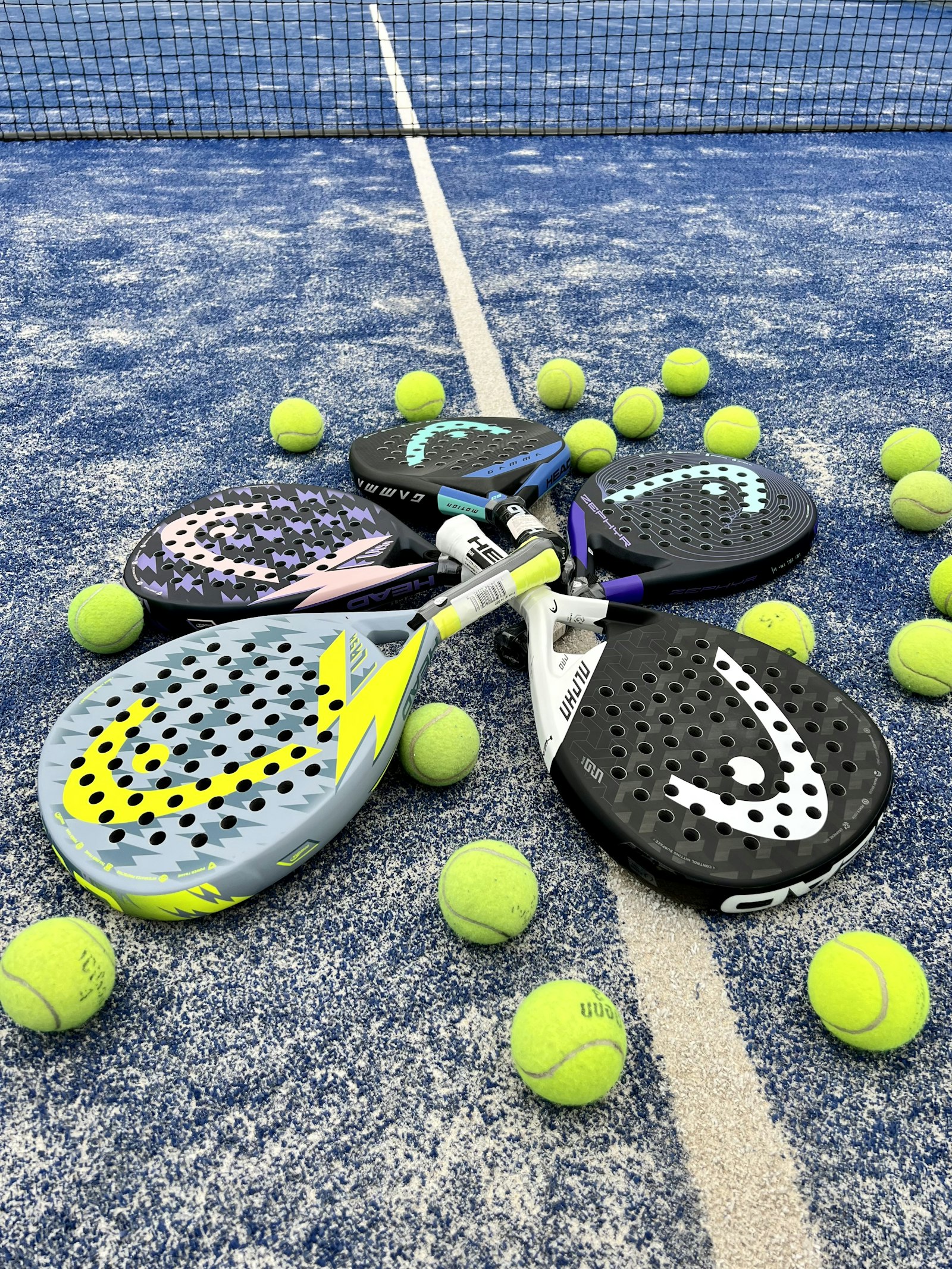
What is padel? It is a racket sport played two against two on an enclosed court smaller than a tennis court. The walls are part of the game, like in squash. You serve underhand, score like tennis, and rallies last a long time. That mix is why it is growing so fast.
Ask anyone who plays and they say the same thing. They came for one game and stayed. Padel is easy to start and hard to put down. This guide covers what the sport actually is, where it came from, and what you need to try it.
How padel works
Padel is almost always played as doubles. Two teams of two, on a court that measures 20 metres long by 10 metres wide. That is smaller than a tennis court. The court is closed in by glass walls at the back and a mix of glass and metal mesh along the sides.
A net splits the court in the middle, a little lower than a tennis net. You score the same way as tennis. Fifteen, thirty, forty, game. Sets go to six games, and most matches are best of three sets.
The serve is underhand. You bounce the ball once, then hit it at or below waist height into the box diagonally across from you. No smashing an ace past someone on the first point of their life.
Then comes the part that makes padel feel different. The walls are in play. If the ball bounces on your side and hits the glass, it is still live. You can turn, let it come off the wall, and hit it back. Points that would be over in tennis just keep going.
The court is small. The walls keep the ball in play. The serve is underhand, so no one gets beaten in the first hour. New players hit real rallies fast. Rallies are the fun part, and they keep you coming back.
Where did padel come from?
Padel started in Mexico in 1969. A businessman named Enrique Corcuera wanted a court at his home in Acapulco but did not have room for a full tennis court. So he built a smaller one and put walls around it to keep the ball from flying into the neighbours' yards. The walls turned out to be the best part.
A friend of his, Alfonso de Hohenlohe, liked the game so much he took it to Marbella, Spain, in the mid 1970s. From there it spread to Argentina and then across Spain, where it became one of the most played sports in the country. For decades it stayed mostly a Spanish and South American thing.
Then, in the last few years, it went everywhere. Sweden, the UK, the Middle East, the United States, and Canada. New clubs, new courts, new players who had never held a racket before.
Why is padel so popular right now?
The simple answer is that the game sells itself. Most racket sports have a long, ugly beginner phase where you chase balls and apologize a lot. Padel skips it. The underhand serve and the walls mean your first session has real rallies in it, and real rallies are what make people book a second session.
It is also social by design. Padel is two against two. That makes it a good reason to see the same friends every week. One court, four people, one hour. It fits into a normal life better than most sports do.
It is a rare sport where the fun part and the game part are the same part.
In Canada, the sport is young but moving quickly. Courts have opened in and around Toronto, Montreal, Vancouver, and Calgary, and more clubs are being built. Court time can be hard to book in some cities, which tells you something. Demand is ahead of supply.
How is padel different from tennis and squash?
Padel sits between the two, and that is easiest to see side by side.
Compared to tennis, the court is smaller, the net is a touch lower, and the serve is underhand. The racket is solid, with no strings, and shorter than a tennis racket. Scoring is the same, so tennis players feel at home right away. The big change is the walls. In tennis, a ball past you is gone. In padel, it comes back off the glass and the point continues.
Compared to squash, you have a net and a partner. Squash is played into the same wall as your opponent, in the same box, and it is brutal cardio. Padel keeps the wall play but adds the net, the open sky, and the doubles format. It is kinder on the body and easier to learn.
If you want the full breakdown, we wrote a whole post on padel vs tennis and another on padel vs pickleball.
What do you need to play padel?
Not much, which is another reason the sport spread so fast.
- A racket. Padel rackets are solid, with a foam core and holes in the face. For your first one, look at beginner padel rackets with a round shape. They are the easiest to control while you learn.
- Balls. Padel balls look like tennis balls but have slightly less pressure, so they sit better with the walls. A tube of padel balls costs about the same as tennis balls.
- Court shoes. Any clean court shoe works for your first sessions. Once you play weekly, shoes made for padel grip better on the turf.
Most clubs rent rackets, so you can try the game before you buy anything. When you are ready for your own, our guide on how to choose a padel racket walks through shape, weight, and feel in plain terms.
Is padel hard to learn?
No. That is the whole point. If you can bounce a ball and hit it over a net, you can play a real game of padel in your first hour. Getting good takes longer, of course. The walls that save you as a beginner become a skill of their own later. Reading the rebound, playing off the glass, lobbing the pair at the net. There is depth here for years.
But the start is easy, and the start is what matters. Book a court, bring three friends, and see for yourself. Padel is easy to start and hard to put down. You have been warned.