August 7, 2026 · 7 min read
Padel Glossary: Every Padel Term Explained in Plain English
A plain English padel glossary covering every padel term you will hear on court, from bandeja and vibora to EVA cores and golden points, each in a few clear sentences.
By The Padle Shop
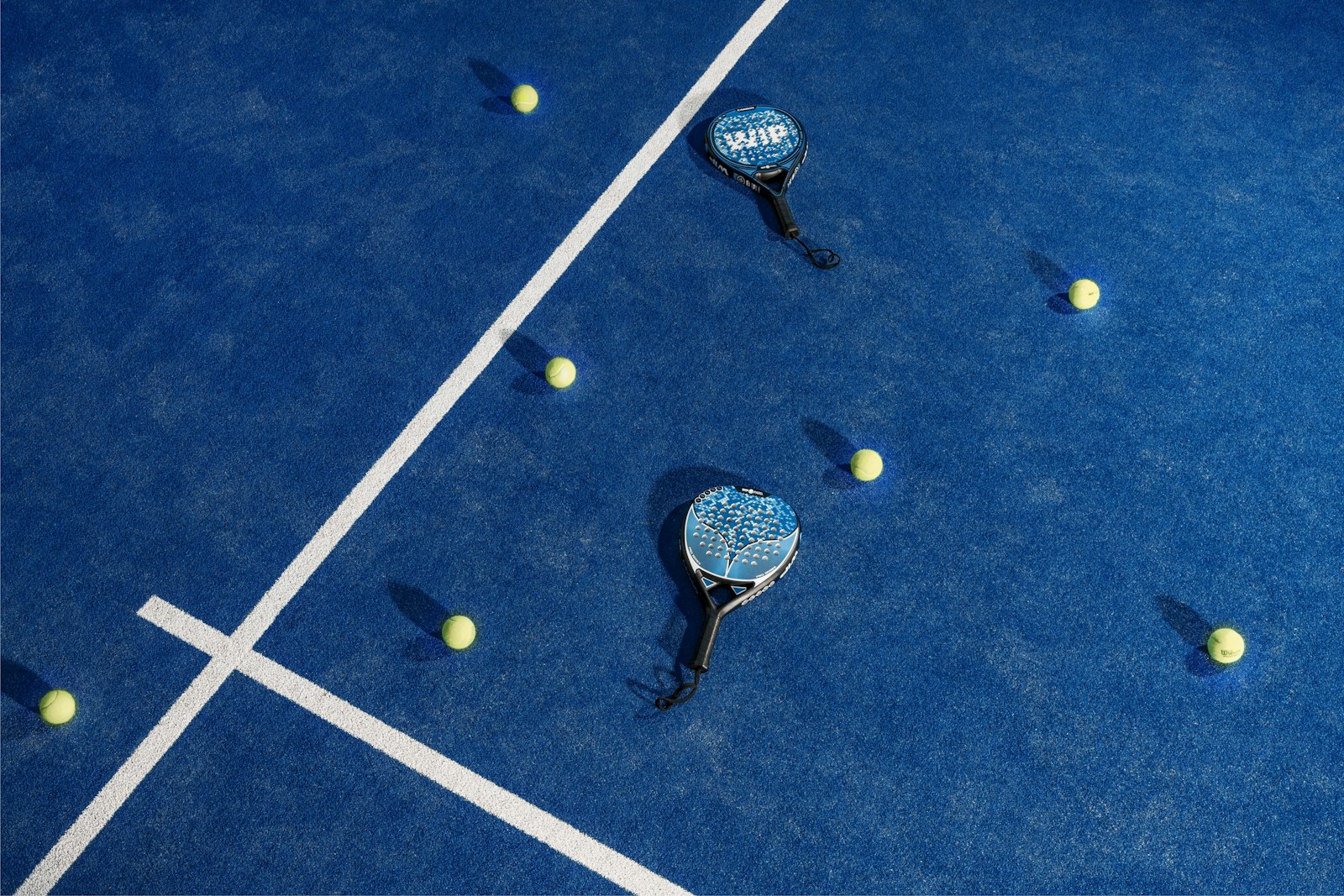
This padel glossary explains every padel term you will actually hear, in plain English. Padel grew up in Spain and Argentina, so half the vocabulary is Spanish and the other half is gear jargon. Each definition below stands on its own, so you can jump straight to the word that confused you.
If you are brand new, our guide to what padel is is the better starting point. This page is the dictionary.
What are the main padel shots?
Bandeja
A bandeja is a controlled overhead shot hit with slice in response to a lob. Instead of smashing, you carve under the ball so it lands deep and stays low off the glass. The job of a bandeja is not to win the rally, it is to keep your team at the net.
Vibora
A vibora is an aggressive overhead hit with sidespin, somewhere between a bandeja and a smash. You cut across the outside of the ball so it skids low and squirms off the side glass. It attacks without the risk of a full smash.
Chiquita
A chiquita is a soft, low shot played from the back of the court at the feet of the net players. It forces your opponents to volley up weakly, buying your team time to move forward and take the net.
Bajada
A bajada is an attacking shot hit off a ball rebounding from your own back glass. You let the lob bounce, let it come off the wall, then drive it hard back over the net. It turns a defensive position into a counterattack in one swing.
Remate (smash)
A remate is the padel smash, a full power overhead meant to end the point. Because the walls return most flat smashes, players aim to bounce the ball over the back glass, into the side glass, or off the court entirely.
Globo (lob)
A globo is the padel lob, a high, deep ball hit over the opponents at the net. It is the most important shot in padel, because it forces the net team backwards and lets your team move up. Good players hit far more globos than smashes.
Salida de pared (wall exit)
A salida de pared is any shot played after the ball rebounds off the glass on your side, literally a wall exit. You let the ball bounce, turn, track it off the wall, and return it. Reading these rebounds is the core defensive skill in padel.
Por tres
A por tres is a smash that sends the ball over the side wall of the court, which stands three metres high. The ball leaves the enclosure and the point is over, since opponents rarely have room to chase it.
Por cuatro
A por cuatro is a smash that bounces on the opponent's side and flies out over the back wall, which stands four metres high. In most club games the point is simply won, though in some formats opponents may run out through the door and play the ball back.
What do the court and rules terms mean?
Golden point
A golden point is a single deciding point played when a game reaches 40-40, instead of traditional advantage scoring. The receiving team chooses which player takes the return, and whoever wins the point wins the game. Our padel rules guide covers scoring in full.
Service box
The service box is the area on each side of the court where the serve must land, diagonally across the net from the server. The serve is underhand, must bounce in the box, and may then touch the glass but not the mesh. The exact serving rules live in our rules walkthrough.
The cage
The cage is the informal name for the padel court enclosure, the mix of glass walls and metal mesh that surrounds the 20 by 10 metre court. Balls rebound off the glass predictably and off the mesh unpredictably, so players trust the glass and fear the mesh.
What do the racket and gear terms mean?
EVA core
An EVA core is the firm foam filling inside most padel rackets. Softer EVA gives comfort and easy power on slow swings, while harder EVA gives control and rewards fast swings. Core hardness is one of the biggest feel differences between padel rackets.
Foam core
A foam core, often called FOAM or polyethylene, is a softer alternative to EVA inside a racket. It compresses more on contact, giving a springy feel and easy depth on slower swings, at the cost of some precision. That trade suits beginners and players with arm pain.
3K, 12K, and 18K carbon
3K, 12K, and 18K carbon describe the weave of carbon fibre in a racket face, where the number is thousands of filaments per strand. Lower numbers like 3K feel slightly softer and more flexible, while 12K and 18K feel stiffer and more precise. None is automatically better.
Fibreglass face
A fibreglass face is a racket hitting surface made from fibreglass instead of carbon. Fibreglass is more flexible, so the ball sinks in and pops out with easy power and a soft, comfortable feel. It suits beginners and budget rackets, while carbon faces suit players who want stiffness and control.
Round shape
A round racket shape places the sweet spot in the centre of the face with the balance near the handle. It is the most forgiving shape and the easiest on the arm, which is why it suits beginners and control players. Our racket shapes guide compares all three shapes in depth.
Teardrop shape
A teardrop racket shape sits between round and diamond, with the sweet spot slightly above centre and a medium balance. It offers a blend of power and forgiveness, which makes it the standard choice for intermediate players who want more punch than a round racket without a diamond's demands.
Diamond shape
A diamond racket shape pushes the sweet spot high on the face and loads weight into the head. It produces the heaviest smashes but forgives off-centre hits the least, so it suits advanced players with fast, clean technique.
Balance (head-light vs head-heavy)
Balance is where the weight sits along a padel racket, described as head-light, even, or head-heavy. Head-light rackets feel quick at the net and gentle on the arm. Head-heavy rackets swing with more momentum and smash harder. Our guide on how to choose a padel racket explains how balance, weight, and core combine.
Sweet spot
The sweet spot is the zone on the racket face where the ball rebounds cleanest with the least vibration. Hits inside it feel effortless, hits outside it feel dead or twisty. Racket shape decides where the sweet spot sits and how large it is.
Overgrip
An overgrip is a thin, replaceable layer of grip tape wrapped over a racket's base grip. It adds tackiness, absorbs sweat, and lets you thicken the handle to fit your hand. Overgrips wear out fast and cost little, so most players keep spares from our grips collection.
Rough surface
A rough surface is a textured or sandy finish on a racket face that helps the strings-free face bite the ball for spin. It matters most on bandejas, viboras, and kick smashes. The texture wears down over time, and some players restore it with grit sheets from the accessories collection.
What are the playing styles and positions called?
Left side player (reves)
The left side player, called the reves in Spanish, covers the left half of the court in doubles, where most balls arrive to a right-hander's backhand. This side handles more overheads and usually takes the aggressive, point-finishing role.
Right side player (drive)
The right side player, called the drive in Spanish, covers the right half of the court in doubles. This side traditionally plays the steadier role: keeping balls in play, setting up the point, and feeding the left side player chances to finish.
Australian formation
The Australian formation is a serving tactic where both players start on the same half of the court, with the server's partner standing on the server's side instead of the opposite one. It changes the angles the returner sees and protects a team's preferred sides.
Keep this page handy
That is every padel term worth knowing. Bookmark it, and when a phrase on court makes no sense, come back. When the gear terms start to matter, the full racket buying guide turns definitions into a decision.