June 28, 2026 · 5 min read
Padel Racket Shapes Explained
Padel racket shapes explained in plain words. Round, teardrop, and diamond compared by sweet spot, balance, and forgiveness, so you pick the right one.
By The Padle Shop
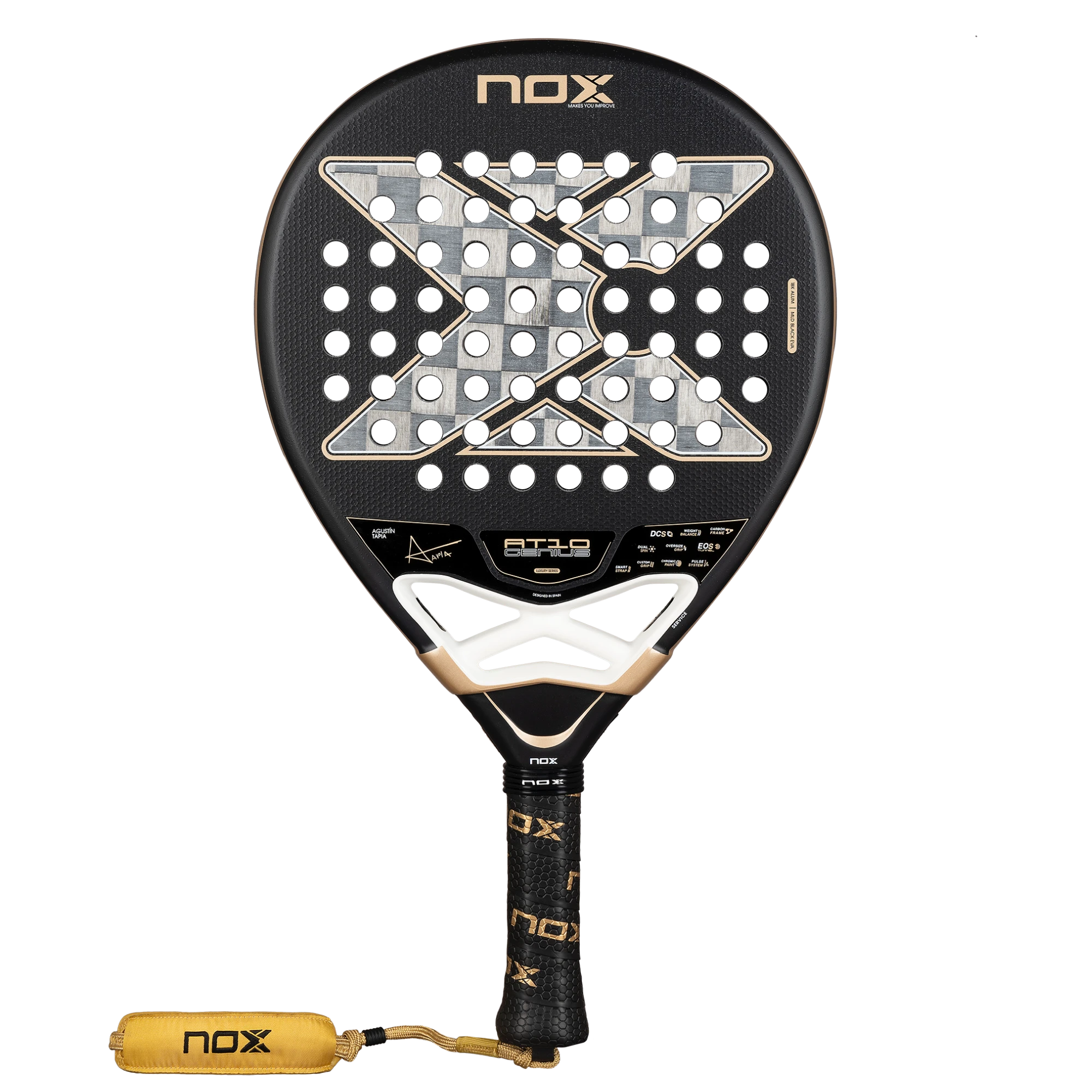
Padel racket shapes come in three kinds: round, teardrop, and diamond. Round rackets have a big central sweet spot and suit most players. Teardrop rackets trade a little control for power. Diamond rackets hit hardest but forgive least. If you are not sure which to pick, go round. The rest of this guide explains why.
Shape is the first thing to decide when you buy a racket, because it controls the two things you feel on every single shot: where the sweet spot sits, and how the weight swings. Everything else, core, face, brand, comes after, and our guide on how to choose a padel racket covers those pieces. This one goes deep on shape.
Why does sweet spot position matter in a padel racket?
The sweet spot is the zone on the face where the ball comes off clean. Hit inside it and the shot feels easy. Hit outside it and the ball dies, twists, or sprays.
Here is the part most buying guides skip. Club players miss the middle of the racket far more often than they think. Not by much, a couple of centimetres, but padel is a fast game played close to the net, and nobody hits the exact centre under pressure. So the real question when you compare shapes is not "how good is this racket when I hit it perfectly?" It is "how bad is this racket when I don't?"
Round: the forgiving one
A round racket puts the sweet spot dead centre, right where your mishits cluster. The balance sits low, near your hand, so the racket feels light and quick even when it is not.
What that gives you: easy volleys, stable blocks, defence that holds up when you are stretched, and an arm that does not ache the next morning.
What it costs you: raw power on the smash. You can still finish points with a round racket, you just do it with placement instead of violence.
Round suits new players, defensive players, anyone with elbow trouble, and plenty of decent players who would score better with fewer errors. If you are in your first year, start with the beginner collection, where nearly everything is round for exactly these reasons.
Teardrop: the middle path
A teardrop moves the sweet spot a little above centre and shifts some weight toward the head. You get a real bump in power and keep most of the forgiveness.
What that gives you: heavier smashes, more free depth on lobs and drives, one racket that can attack and defend.
What it costs you: a slightly smaller margin for error than round, and a touch less speed in fast net exchanges.
The teardrop shape is the natural home for intermediate players. If you have played a year or two, you place the ball on purpose, and your round racket is starting to feel polite, this is your next step.
Diamond: power with a bill attached
A diamond racket pushes the sweet spot high on the face and loads the weight into the head. Swung fast and hit clean, nothing else comes close. The smash is heavier, the drive is meaner, and the racket does real damage.
The bill: the sweet spot is smaller and sits away from where mishits happen, the head-heavy balance is slow at the net and hard on the shoulder, and off-centre hits go nowhere. A diamond racket gives its best to players with fast, clean technique and takes from everyone else.
What are hybrid padel racket shapes?
Walk into a shop and you will see rackets that do not look quite round or quite diamond. Brands call them hybrid, rounded diamond, or wide teardrop. These are not new categories. They are points on the same line.
Every shape decision is really one trade: sweet spot low and central for forgiveness, or high and small for power. A "rounded diamond" sits closer to the diamond end with a little forgiveness bought back. A "wide teardrop" sits closer to round with a little pop added. When a marketing name confuses you, ignore it and look at two things instead: where the widest part of the head is, and where the brand says the balance sits. Those two facts tell you how the racket plays. The name on the sticker does not.
It also helps to know that shape and balance usually travel together, but not always. A few rackets pair a round head with a head-heavy balance, or a teardrop head with a low balance point. Those exceptions play like their balance, not their outline. Balance wins.
Myths about racket shape
"Diamond rackets are the best ones." No. They are the most demanding ones. Brands put diamonds in the hands of pros, so diamonds look elite. A pro would also beat you with a frying pan. The shape is a tool for a specific job, not a rank.
"You should buy diamond to grow into." You will not grow into it, because a punishing racket slows your growth. You learn faster with a racket that forgives your misses and lets you swing with confidence. Most club players should not use a diamond, full stop, and that includes plenty who currently do.
"Round rackets are just for beginners." Tell that to the defensive specialists who win club leagues with them. Round is a style choice, not a skill ceiling.
"More power means more wins." Padel points are mostly lost, not won. The shape that cuts your errors usually beats the shape that pads your highlight reel.
How to choose in ten seconds
Under a year of play, or you value your elbow: round. One to three years, wanting more punch without losing the plot: teardrop. Fast swing, clean contact, competitive matches, no arm issues: diamond, and you have earned it. Once the shape is settled, our complete racket buying guide covers weight, core, and face.
Shape will not fix a swing or win a match on its own. It just decides how much help you get on every ball. Pick for the player you are now. If that means starting simpler than your ego wanted, the round racket collection is where more good padel careers begin than anywhere else.