August 3, 2026 · 6 min read
Padel Racket Weight and Balance Explained
Padel racket weight and balance explained in plain words. What the grams do, what head-light and head-heavy mean, and how to pick the right combination.
By The Padle Shop
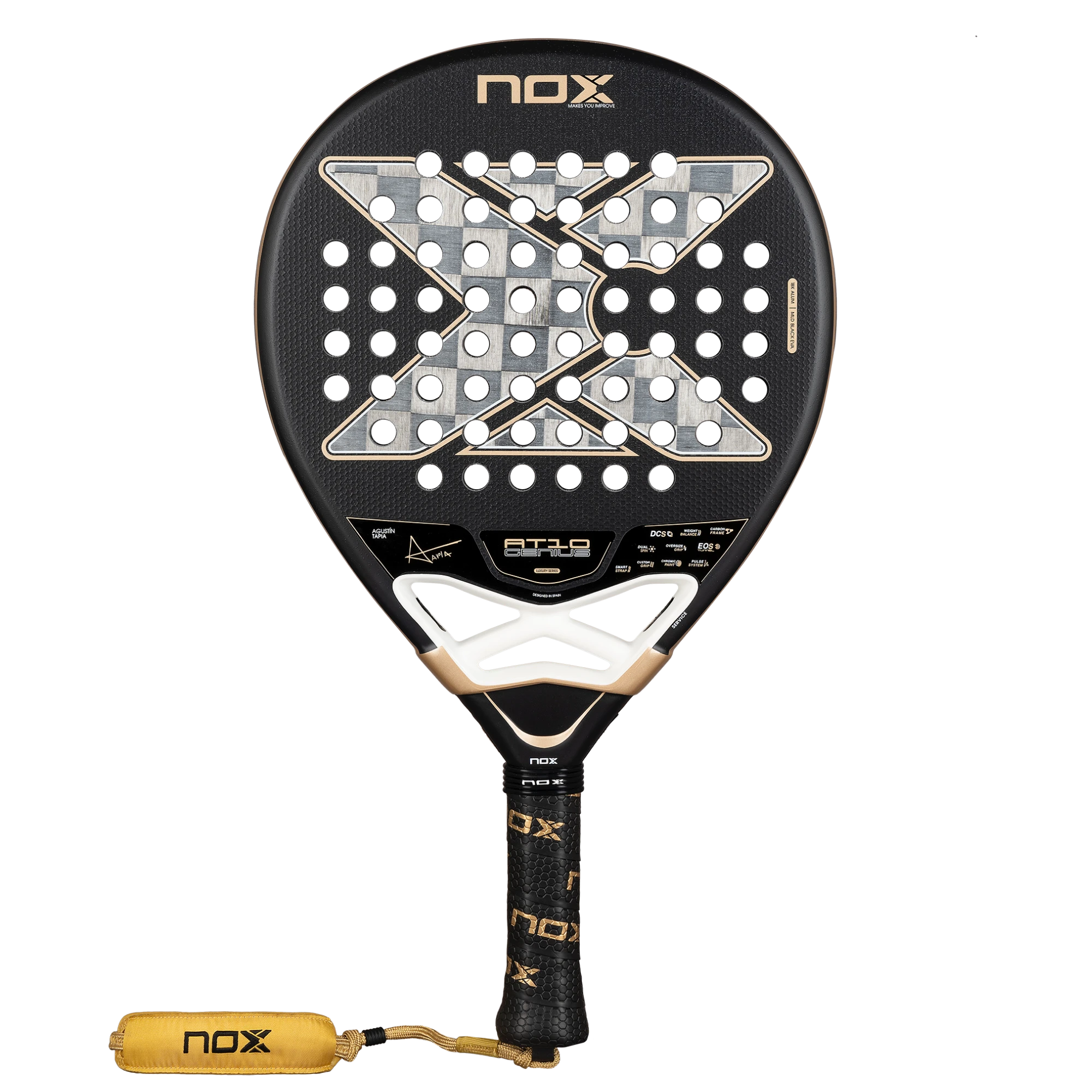
Padel racket weight for most adults should sit between 350 and 375 grams. Beginners do best at the lighter end, around 350 to 360 grams. But the number on the spec sheet is only half the story. Balance, meaning where the weight sits along the frame, changes how a racket feels as much as the weight itself. This guide covers both.
One thing first. Shape has its own guide on padel racket shapes, and the full buying decision lives in our guide on how to choose a padel racket. This post goes deep on grams and balance points only.
What does padel racket weight actually change?
Weight decides the trade between power and speed. A heavier racket carries more mass into the ball, so smashes and drives hit harder with the same swing. A lighter racket changes direction faster, so volleys, blocks, and late reactions get easier. Heavier equals punch. Lighter equals hand speed. Every racket sits somewhere on that line.
Adult frames run roughly 340 to 385 grams. That band sounds narrow. On court it is not. Ten grams is the difference between a racket that stays quick in the third set and one that feels like a door.
Women's frames often sit at 340 to 360 grams. The Wilson Optix V2 Lite 2026 at 355 grams is a good example of the friendly middle. Junior frames drop to 300 to 325 grams, which is why kids should shop the junior collection and not borrow a parent's frame.
There is also a fatigue tax. You swing a racket hundreds of times per match, and a frame that feels fine for ten seconds in a shop can feel very different after ninety minutes. When in doubt between two weights, take the lighter one.
What is balance, and why does it matter as much as weight?
Balance is where the weight sits along the racket. Head-light means the mass sits near your hand, so the racket feels quick and easy to steer. Head-heavy means the mass sits up in the face, so it swings like a hammer. Even balance splits the difference. Same grams, completely different feel.
Think of a broom. Held by the brush end it feels light. Held by the handle end, same broom, same weight, it feels heavy and slow. That is balance.
Head-light and even rackets favour control, defence, and net speed. Head-heavy rackets favour the smash and punish everything else, including your shoulder. Balance usually follows shape, but not always, and when the two disagree the racket plays like its balance, not its outline.
How do weight and balance interact?
They multiply each other. The feel of a racket in your hand is the weight times where it sits. A head-heavy 360 gram racket swings heavier than an even 370 gram racket, because the mass is further from your hand and takes more effort to move. Judge the two numbers together, never alone.
This is why comparing rackets on weight alone misleads people. The Head One Ultralight is a 300 gram round control frame, and it plays even quicker than the number suggests because the balance sits low. The Nox AT10 Genius 18K Alum runs 360 to 375 grams in a teardrop, and it swings with more authority than the grams alone would tell you.
The practical rule: for more power, go up in balance before you go up in weight. For more speed and comfort, come down in balance first.
What weight and balance should you choose for your level?
Match the numbers to your level and your arm, not your ambition. Beginners want light and low balanced. Intermediates can carry a little more mass. Advanced players earn the heavy head-forward frames with fast, clean technique. Juniors and anyone with elbow history should stay light and head-light, no exceptions.
| Player type | Weight range | Balance |
|---|---|---|
| Beginner | 350 to 360 g | Head-light to even |
| Intermediate | 355 to 370 g | Even |
| Advanced | 365 to 375 g | Even to head-heavy |
| Junior | 300 to 325 g | Head-light |
| Elbow issues | 340 to 355 g | Head-light |
A few real reference points. Everything in our beginner collection sits in that first row on purpose. The Head Radical Pro 2026 is a 370 gram teardrop with control foam, a proper intermediate to advanced frame for a player who has grown into the mass. For kids, the Nox AT10 Genius JR runs 300 to 325 grams in a round fibreglass build, sized for growing arms.
If your arm has ever complained after tennis or padel, treat the elbow row as law. A head-heavy racket sends shock straight into the joint, and no smash is worth six weeks off court. Light frame, low balance, boring elbow. Boring is what you want an elbow to be.
How do you test weight and balance before you buy?
Hold the racket in your normal grip and shadow ten fast volleys, then ten smashes. If the head lags on the volleys, it is too heavy or too head-heavy for you. If the smash feels empty, you can afford more mass. Test tired if you can, not fresh. Fatigue tells the truth.
A borrowed racket at your club is worth more than any spec sheet. Two frames at 365 grams can feel a full class apart once balance enters the picture.
When you are ready to shop, our full racket collection lists weight for every frame, and our picks for the best padel rackets in Canada call out weight and balance for every recommendation, with CAD prices.
Frequently asked questions
Is a 380 gram padel racket too heavy?
For most club players, yes. Frames run up to about 385 grams, but that end of the range belongs to strong players with fast swings and healthy arms. If you are asking the question, 355 to 370 grams will serve you better.
Does a lighter padel racket mean less power?
Less free power, yes, but not less power overall. Power comes from racket head speed as much as mass, and a lighter frame is easier to accelerate. Many players actually smash better after dropping ten grams, because they swing faster and hit the sweet spot more often.
Can I change the balance of my racket?
Within limits, yes. Overgrips add weight at the handle and shift balance down, making the racket feel quicker. Lead tape at the head shifts it up for more punch. Small changes work. But if a racket needs major surgery to feel right, it was the wrong racket.