August 11, 2026 · 6 min read
Control vs Power Padel Rackets: Which Should You Buy?
Control vs power padel rackets, settled in plain words. What each one actually does, who each one suits, and why most players should pick control.
By The Padle Shop
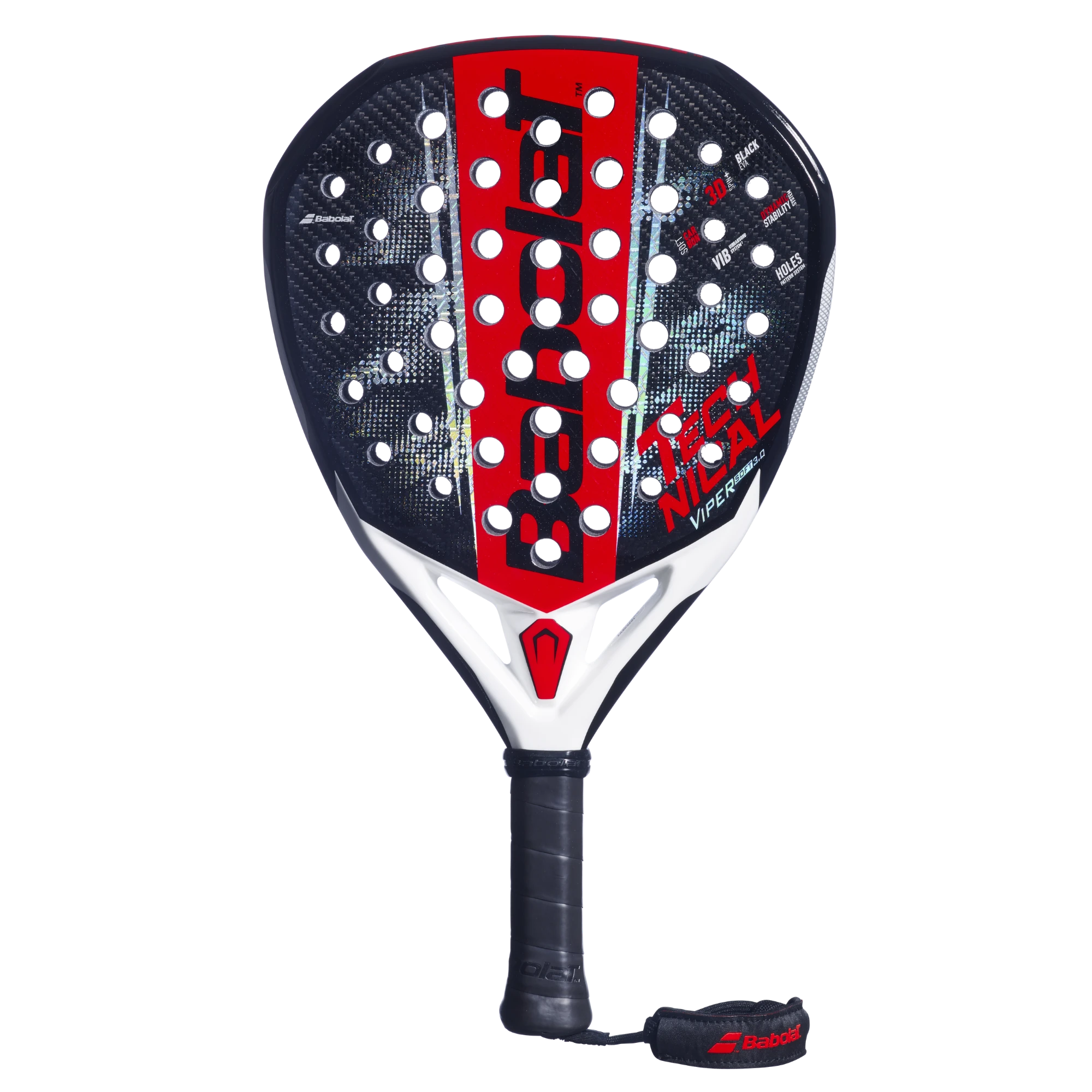
Control vs power padel rackets is the first real fork in the road when you shop, and the answer is simpler than the marketing wants it to be. Most players should buy a control racket. A power racket only pays off if you are a confirmed attacker who hits the middle of the face cleanly, under pressure, most of the time.
That is the verdict. The rest of this guide explains what the labels mean and how to be honest about which side of the line you sit on. Here is the comparison in one table.
| Control racket | Power racket | |
|---|---|---|
| Shape | Usually round, sometimes teardrop | Usually diamond |
| Sweet spot | Big, central, forgiving | Smaller, higher on the face |
| Weight feel | Light and quick in the hand | Heavier through the swing |
| Balance | Low, near the handle | High, toward the head |
| Who it suits | Most players, defenders, anyone with arm issues | Confirmed attackers with clean technique |
| Typical cost (CAD) | Under $200 to start, $300 to $500 for top models | Rarely cheap, most sit in the $350 to $600 band |
What is a control padel racket?
A control racket is built to make your normal shots reliable. The sweet spot is large and central, the balance sits near your hand, and the face and core absorb mishits instead of punishing them. It gives up some smash power and pays you back with fewer errors on every other ball.
In practice that means stable volleys, blocks that stay in, and a racket that moves fast at the net. Shape does most of this work, which is why control rackets are usually round. Our guide on padel racket shapes covers that side in full.
Real examples from our shelves: the Adidas Metalbone Ctrl 2026, a round racket with a 16K carbon aluminized face and soft EVA core. The Head Radical Pro 2026, a 370g teardrop with a control foam core, proof that control is not only for round shapes. The Nox ML10 Pro Cup, round, HR3 core, rough surface for spin. And the Wilson Optix V2 Lite 2026, round, fibreglass, 355g, easy on the arm. Find the round frames in our round racket collection, and the Radical Pro with the rest of the control lineup in the full racket collection.
What is a power padel racket?
A power racket loads weight into the head and moves the sweet spot high on the face. Hit it clean and the ball comes off heavier than anything a control racket can produce. Hit it off centre and the ball dies. It is a specialist tool that rewards good technique and punishes everything else.
The trade is not subtle. Head-heavy balance is slower at the net and harder on the shoulder. The smaller, higher sweet spot sits away from where club players actually miss. None of that matters to a player who attacks well. All of it matters to everyone else.
Real examples: the Adidas Metalbone 2026, a diamond with a 16K carbon aluminized face. The Head Coello Pro 2026, a diamond with power foam and a carbon hybrid face. The Babolat Viper Juan Lebron 3.0, a 12K carbon diamond. And the Wilson Defy Pro V1, a diamond with power foam and 15K carbon. Browse them in the diamond racket collection.
Why do most players play better with control?
Because padel points are mostly lost, not won. Club matches are decided by errors, and a control racket cuts errors on every shot. A power racket adds pace to one shot, the smash, and adds risk to all the others. For most players that is a losing trade.
There is a second reason nobody likes to hear. Almost everyone overrates how clean their contact is. Under pressure, stretched wide, club players miss the centre of the face constantly. A control racket is designed around that fact. A power racket pretends it is not true. And a third: a lighter feel and low balance mean less strain on the elbow and shoulder, which matters if you play twice a week or more.
When does a power racket actually pay off?
When you already win points with your overhead game. You finish smashes, your contact is clean at speed, you have no elbow or shoulder trouble, and you play matches where the extra pace converts to points. If all four are true, a power racket makes a good attacker more dangerous.
That describes advanced players almost exclusively, which is why nearly everything in our advanced racket collection leans this way. It does not describe someone hoping the racket will supply power their technique has not built yet. It works the other way around. Technique first, then the racket that amplifies it. If you sit between the camps, a teardrop control racket like the Radical Pro is the honest middle step.
What should you expect to pay in Canada?
Control rackets cover the whole price range. Solid ones start under $200 CAD, and top models sit in the $300 to $500 band. Power rackets cluster higher, mostly $350 to $600, because they use stiffer premium carbon aimed at advanced players.
Do not read price as a power rating. An expensive control racket costs more for its materials and feel, not because it secretly hits harder. Set a budget, then filter the full racket collection by how you actually play.
The ten second decision
Under two years of play, defensive style, or any arm trouble: control, no debate. Proven attacker with clean, fast technique: power, and enjoy it. Not sure: control, because doubt is the answer. Once you have picked a side, our complete buying guide covers weight, core, and face.
Frequently asked questions
Can you still smash with a control racket?
Yes. You finish points with placement and timing instead of raw pace. Plenty of strong club players smash well with round rackets by aiming for the fence or the corners. The ceiling is lower, but the floor is much higher.
Are power rackets bad for your elbow?
They carry more risk. Head-heavy balance and stiff faces send more shock up the arm, and off-centre hits make it worse. Any history of tennis elbow or shoulder pain, stay with control. No smash is worth six weeks off court.
Is a teardrop racket control or power?
It can be either. The Head Radical Pro 2026 is a teardrop built for control, while other teardrops lean toward power. Check the balance point and the core, and see our shapes guide for how shape and balance interact.