July 3, 2026 · 6 min read
The Best Padel Shoes for Canadian Courts (2026)
The best padel shoes of 2026, compared in detail. Why court soles matter, herringbone against all-court grip, and real models with CAD prices.
By The Padle Shop
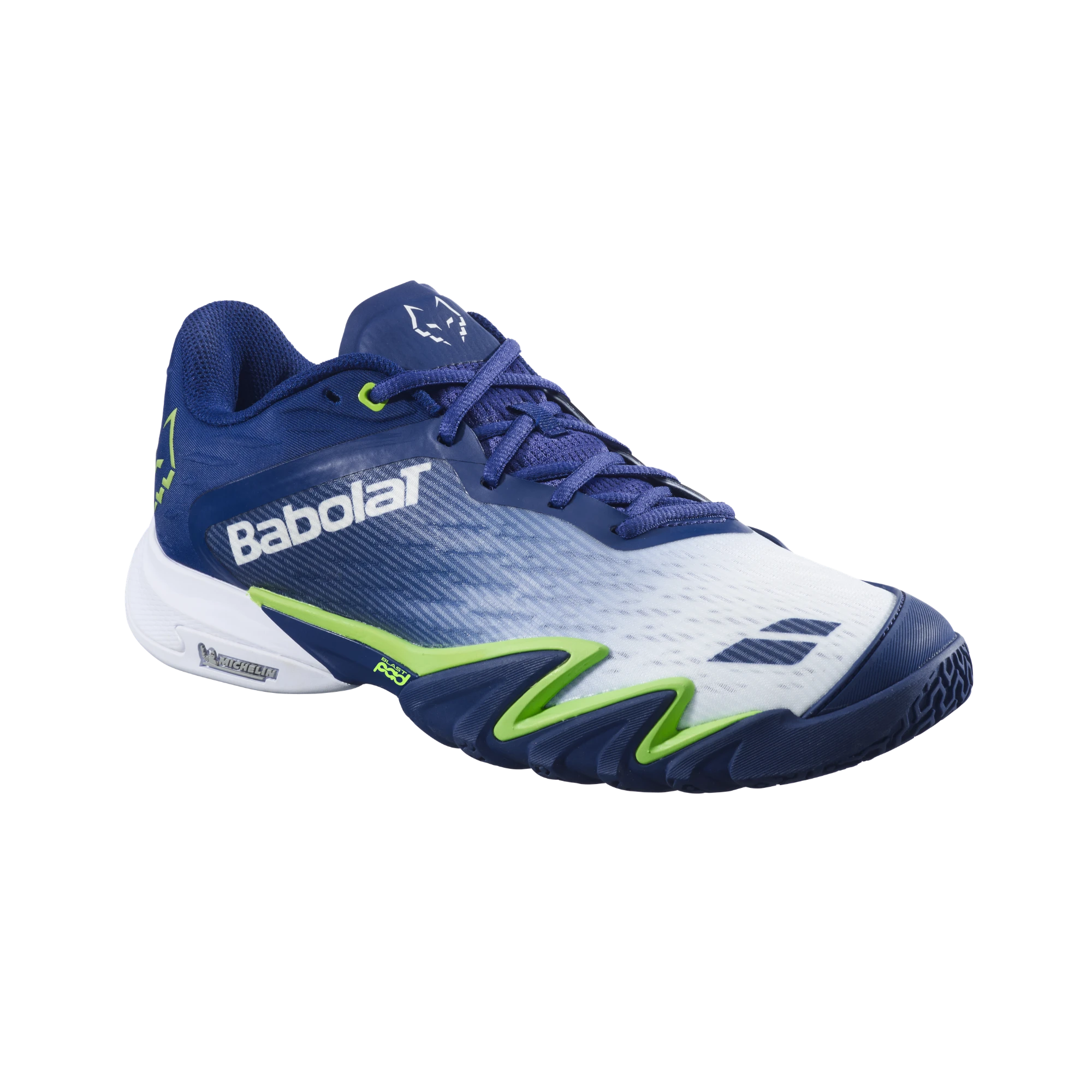
The best padel shoes grip sand-dusted turf, hold your foot on hard side cuts, and last more than a season. Our picks for 2026 are the Babolat Premura 3 for grip, the Head Motion Pro for comfort, and the Wilson Bela Tour for stability. Expect to pay about $150 to $250 CAD.
Shoes are the least glamorous purchase in padel and the most important one after the racket. Maybe before the racket. A dull racket costs you points. A slipping shoe costs you ankles. And if the racket itself is still an open question, our guide on how to choose a padel racket settles that side of the kit.
Why running shoes fail on a padel court
Padel courts are artificial turf dressed with sand. That surface is nothing like a road or a gym floor, and shoes built for those places fail on it in two ways.
First, grip. Running shoes have soles designed to roll forward. Padel is played sideways. You lunge, cut, and push off laterally on almost every point, often on loose sand, and a forward-rolling sole slides exactly when you need it to bite.
Second, support. Runners are built soft and high to cushion heel strikes. That tall, squishy platform tips easily when you cut hard to the side. Padel shoes sit low and firm so the shoe moves with your foot instead of letting it roll over the edge.
Most Canadian clubs are indoor or covered, so you do not need weatherproofing. You need traction on sandy turf and a shoe that holds your foot. That is the whole spec.
Herringbone or all-court sole?
Flip a padel shoe over and you will see one of two patterns.
Herringbone is the zigzag. The grooves bite into sand-dressed turf and release it as you move, which gives the most grip on a proper padel surface. This is the pattern to buy if you play on turf courts, which in Canada is nearly everyone.
All-court soles mix herringbone zones with flatter rubber. They grip a little less on sand and wear better on hard surfaces. Pick this only if you split time between padel and hard-court tennis or pickleball and refuse to own two pairs.
If in doubt, herringbone. It is the default for a reason.
The shoes that earn their price in 2026
Four models stand out this year. Each has a real strength and a real flaw, because every shoe is a compromise.
Babolat Premura 3, about $240 CAD
Juan Lebron's shoe and the benchmark for grip. Full herringbone sole, low and planted feel, built specifically for padel movement. The Michelin rubber holds on sandy turf better than anything else we have tested at the net. The catch: the fit runs snug through the toe box. Wide feet should try before buying or size up half a step.
Head Motion Pro, about $175 CAD
The comfort pick, and the best value on this list. Softer underfoot than the Premura, generous fit, easy to wear for long sessions and league nights. Comes in men's and women's versions. The catch: that softer cushioning gives up a little precision. On very hard cuts you can feel the shoe move a beat behind your foot.
Adidas padel range, about $130 to $200 CAD
Adidas builds its padel shoes on frames from its tennis line, with soles adjusted for turf. The result is a familiar, athletic fit and the widest choice of looks in the sport. The catch: the range is broad and uneven. The top models are excellent, the entry models are closer to relabelled tennis shoes, so check that the sole is actually herringbone before you pay.
Wilson Bela Tour, about $250 CAD
The shoe from Bela's line, and the stability pick. A firm chassis and a locked-down midfoot make it the most planted shoe here on aggressive side-to-side play. The catch: it is the heaviest shoe on this list, and the firm build takes a few sessions to break in. Players who like a light, fast feel will find it stiff.
Men's and women's fits are actually different
This is not marketing. Women's feet are, on average, narrower at the heel relative to the forefoot, and decent brands build the last differently to match. A heel that slips inside the shoe on a hard stop is both slow and dangerous.
Our women's padel shoes and men's padel shoes are separated for that reason, not for the colourways. That said, fit beats label. If a men's shoe holds your heel better, wear the men's shoe.
Whatever you pick, try it with the socks you actually play in, and leave a thumb's width at the toe. Padel stops drive your foot forward, and a too-short shoe turns every sprint to the net into a bruised toenail.
Can you just use tennis or squash shoes?
For your first few games, sure. Both are court shoes, both handle lateral movement, and nobody should buy a full kit before they know they like the sport.
Once you are playing regularly, the differences start to cost you. Hard-court tennis soles are built for abrasive concrete, so the rubber is tough but the tread is shallow, and shallow tread skates on loose sand. Squash and indoor shoes go the other way: gum soles with fantastic grip on wooden floors that wear down fast on turf grit. Padel shoes split the difference on purpose, with deep herringbone for the sand and rubber firm enough to survive it.
The other gap is the sand itself. Padel-specific soles shed sand as the tread flexes. Flat indoor soles pack it in and turn slick mid-match, which is a strange and unpleasant surprise the first time it happens.
Make them last longer
A few cheap habits stretch the life of any pair. Keep them for the court only, because pavement grinds down herringbone faster than turf ever will, and walking to the club in your court shoes is the quiet killer of grip. Knock the sand out of the tread after you play. Let them dry open and out of a gym bag, since damp foam breaks down early. And if you play more than twice a week, two pairs in rotation outlast three bought one after another, because the midsole gets a day to decompress.
When to replace them
Padel shoes die from the sole up. When the herringbone pattern wears smooth under the ball of your foot, the grip is gone, even if the shoe looks fine from above. For weekly players that is usually one season, roughly eight to twelve months. Twice-a-week players should expect less.
Sliding on court that used to feel grippy is the sign. Do not wait for a rolled ankle to confirm it.
Good shoes are the cheapest injury insurance in this sport. Pick the pair that matches how you move, not the pair that matches your kit, and check the full range of padel shoes when your soles go smooth.