July 13, 2026 · 6 min read
Adidas Metalbone vs Head Coello Pro vs NOX AT10
Adidas Metalbone vs Head Coello Pro vs NOX AT10: the 2026 pro rackets of Galan, Coello, and Tapia compared on power, control, comfort, and who should buy each one.
By The Padle Shop
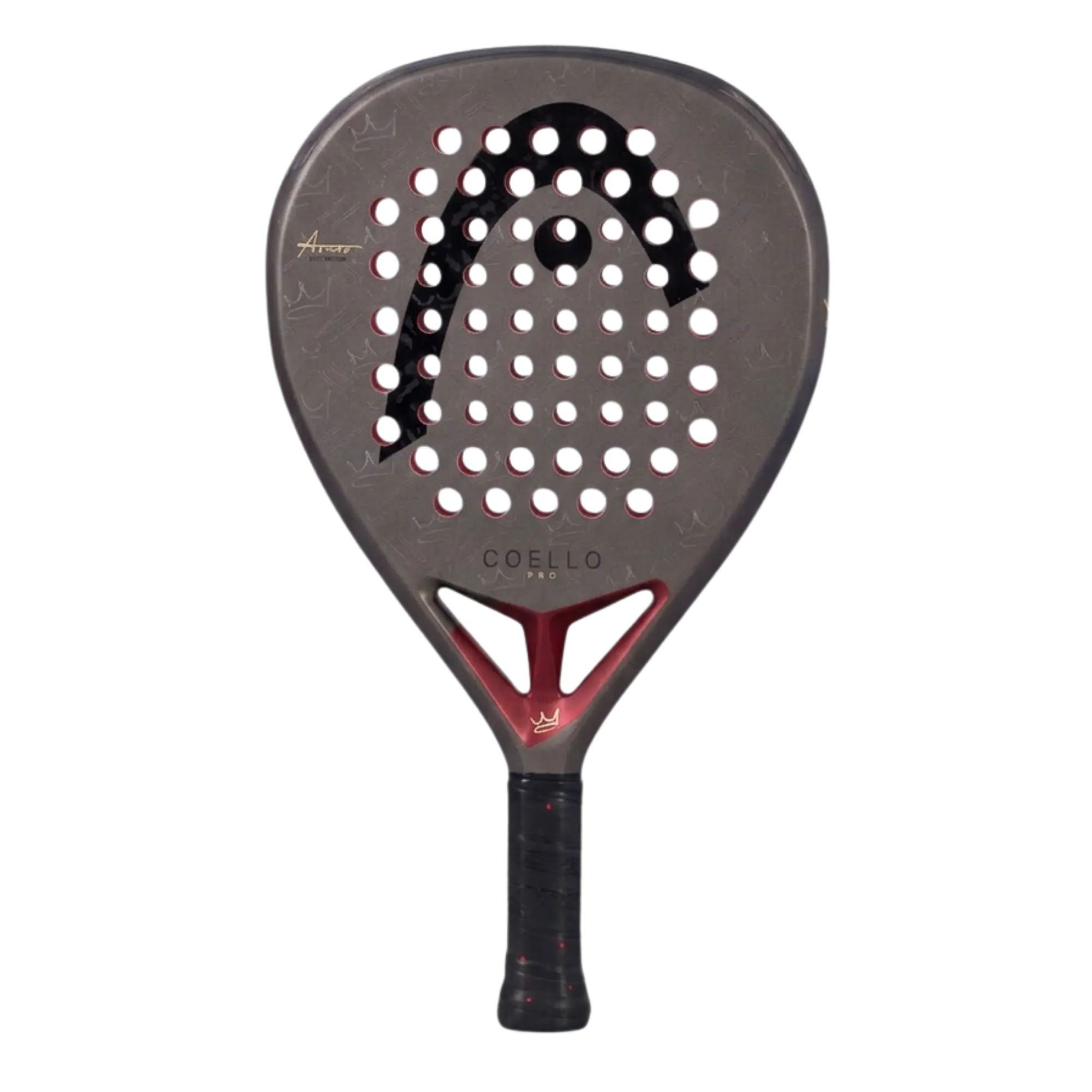
Metalbone vs Coello vs AT10 is really a question about how you play. The Adidas Metalbone 2026 and Head Coello Pro 2026 are diamond power rackets built for attackers. The NOX AT10 Genius 18K is a teardrop that trades raw power for control. All three are heavy, pricey, and demanding, and most club players should buy none of them.
That last line is not a joke, and we will get to it. But these are the three most asked-about rackets in the sport right now, so let us compare them properly first. They belong to the three best players on earth. Ale Galan plays the Metalbone. Arturo Coello plays the Coello Pro. Agustin Tapia plays the AT10. Same tour, very different tools.
Metalbone vs Coello Pro vs AT10: the specs side by side
| Adidas Metalbone 2026 | Head Coello Pro 2026 | NOX AT10 Genius 18K 2026 | |
|---|---|---|---|
| Player | Ale Galan | Arturo Coello | Agustin Tapia |
| Shape | Diamond | Diamond | Teardrop |
| Weight | ~353 g plus add-on weights | ~370 g | 360 to 375 g |
| Balance | High (268 mm) | Very high (272 mm) | Medium (260 mm) |
| Core | Soft Performance EVA | Power Foam | MLD Black EVA, multi-layer |
| Face | Aluminized carbon 16K | Carbon hybrid, rough surface | Aluminized carbon 18K |
| Feel | Medium stiff (50 RA) | Very stiff (72 RA) | Stiff (62 RA) |
| Character | Power, adjustable | Maximum power | Control and precision |
| Price | ~$620 CAD | ~$520 CAD | ~$620 CAD |
Prices move with stock and exchange rates, so treat them as a guide. The pattern is the point. Two diamonds with the weight in the head, one teardrop with the weight closer to your hand. If balance points and core foams are new territory, our guide on how to choose a padel racket explains each spec in plain words.
Which racket has the most power?
The Coello Pro, and it is not close. It is the heaviest of the three, the balance sits deepest in the head, and the frame is very stiff. Head's Auxetic 2.0 layup and Power Foam core are tuned for one job, which is ending the point from the net. Reviewers score its power around 9 out of 10, and the smash feels like it. The cost is everything else. It is tiring to swing, firm on the arm, and it punishes late contact.
The Metalbone 2026 is just behind it, with a twist. Its weight and balance system lets you screw small weights into the frame, up to about 11 grams, so you can shift it from strong to monstrous. Galan plays it fully loaded. You do not have to. It is the most adjustable racket on this list, and its softer core makes it slightly friendlier than the Head on contact.
The AT10 is the odd one out. It can hit winners, but it will not give you free power. It rewards players who create speed with technique.
Which racket has the most control?
The AT10 Genius, clearly. The teardrop shape keeps the balance at a manageable 260 mm, the multi-layer EVA core gives a predictable response, and the 18K aluminized carbon face with its sanded, textured finish grips the ball for spin. Tapia uses it to place balls on coins. Reviews rate its control and stability higher than almost any racket in its class. If your game is built on lobs, angles, and patience, this is the one that matches it.
The Metalbone sits in the middle. Good control for a diamond, a decent sweet spot, and real spin from the textured face, but it is still a diamond. The high balance means the head arrives with momentum, and momentum is the enemy of touch shots.
The Coello Pro finishes last here, and Head would not argue. Control scores hover around the high 6 range. It amplifies a clean, aggressive game. It does not tidy up a messy one.
Which racket is the most forgiving?
None of them, but there is an order. The AT10 is the most forgiving of the three because its sweet spot sits lower and the balance is closer to neutral. The Metalbone is next, helped by its softer core. The Coello Pro is the least forgiving racket in this comparison. At 370 grams, very head heavy and very stiff, off-centre hits send the shock straight up your arm. Several strong players demo it and hand it back within a week.
Forgiveness matters more than most buyers admit. A racket you can swing fast in the third set beats a racket that looks fast in the shop. If your matches are decided by tired arms and late volleys, and most club matches are, forgiveness is the spec that wins them.
Who should actually buy each one?
- Buy the Coello Pro if you are an advanced attacker who lives at the net, finishes points with the smash, and has the fitness to swing 370 grams for two hours. You want maximum power and you accept the trade.
- Buy the Metalbone if you are an advanced player who wants big power with room to tune. The add-on weights let you start lighter and grow into it, which makes it the most sensible of the three big-name rackets.
- Buy the AT10 if you are a strong all-court player who builds points instead of blasting them. It is the easiest of the three to live with, and the best of the three for control-first padel.
You can browse the full Adidas padel, Head padel, and NOX padel ranges to see each family, because all three brands make friendlier versions of these exact rackets.
Should most club players buy a pro racket at all?
No. And we sell these rackets, so read that again.
Pro rackets are built for people who train every day, hit the sweet spot almost every time, and have the forearm strength of, well, Coello. For a club player, that same racket means slower hands at the net, mishits that sting, and a tired arm by game three. Elbow pain is the classic ending. The pros are paid to play these. You are not.
The smart move for most intermediate players is one shelf down. Same brands, same shapes, softer cores, 20 to 40 grams easier to swing, and usually $200 to $300 cheaper. That is exactly what our intermediate padel rackets collection is. A Metalbone Carbon or a Coello Motion gives you most of the feel with none of the punishment.
And if you are still choosing your first or second racket, shape and weight matter far more than any pro name on the frame. Our full guide to choosing a padel racket starts there.
The short version
The Coello Pro 2026 is the biggest weapon and the harshest teacher. The Metalbone 2026 is the tunable power racket, and the smartest buy of the three because it can meet you partway. The AT10 Genius 18K is the control player's pick and the easiest to actually use.
If you demo before you buy, do it right. One session tells you if a racket feels good. Three sessions tell you if it still feels good when your arm is tired, and that is the answer that counts.
Buy the one that matches the player you are this season, not the player on the poster. And if you know you are not an advanced attacker yet, buy the step-down version, play twice as often, and let your game earn the pro frame later. That is what the ball cares about.